

Inoperative Considerations
SUMMARY
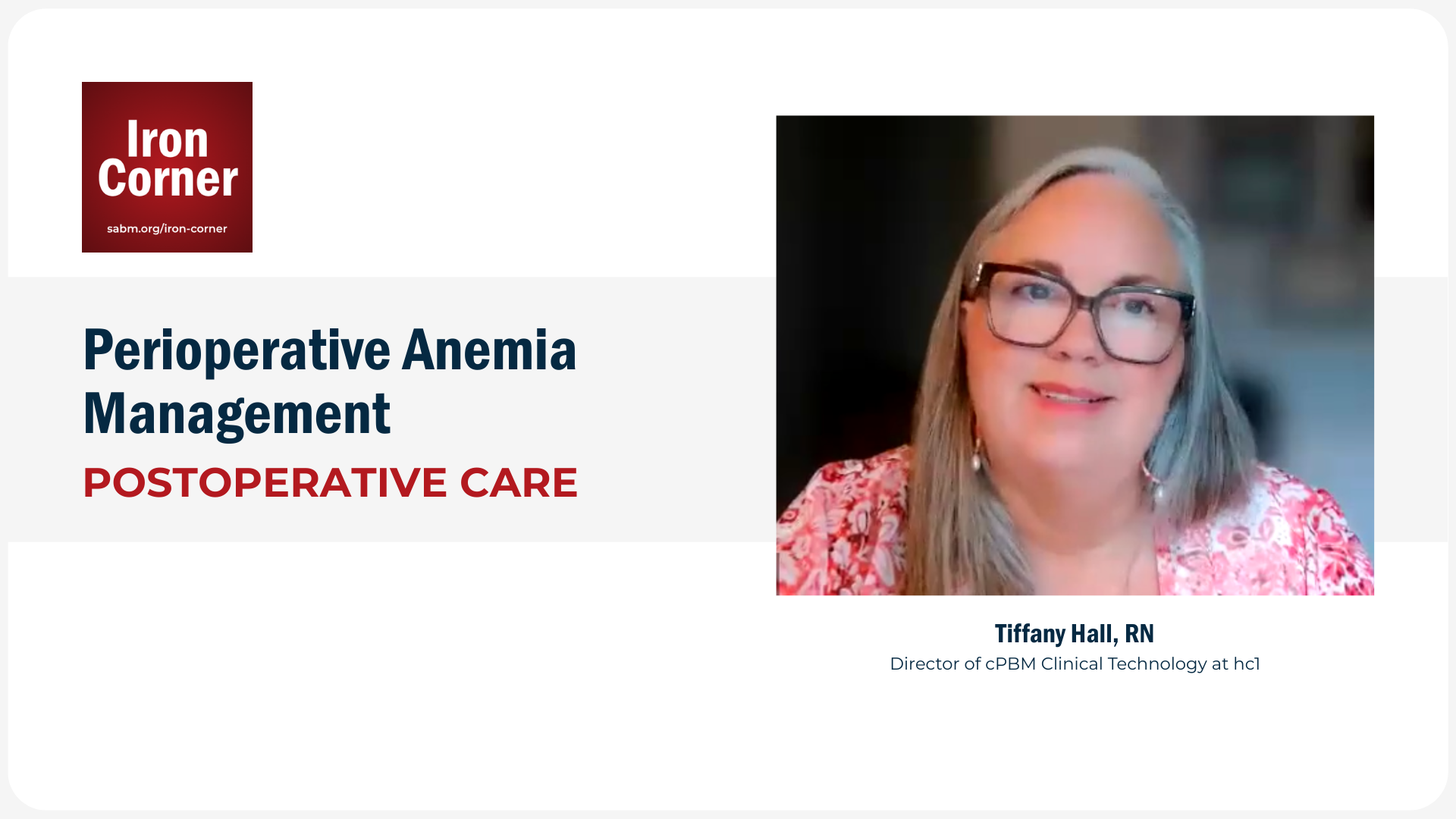
- Perioperative anemia (before, during, and after surgery) is linked to higher morbidity, mortality, longer recovery, and hospital stays.
- Postoperative anemia is common and often under-recognized, yet it can delay wound healing, rehabilitation, and increase infection risk.
- Proactive postoperative evaluation and treatment of anemia is essential for improving outcomes and reducing transfusion needs.
- It is imperative that all postoperative patients be evaluated for micronutrient deficiencies and anemia again within one month after surgery, and up to six months postoperatively until optimized. Following up with the patient’s primary care provider is essential.
How Common Is Anemia in Postoperative Surgical Patients?
- 75%-90% of certain surgical patients may be anemic postoperatively, especially after significant blood loss or inflammatory responses.
- Postoperative anemia is highly prevalent after major surgeries such as orthopedic and colorectal procedures.
What Is the Impact of Anemia on Clinical Outcomes in Postoperative Surgical Patients?
- Postoperative anemia can increase the risk of cardiac events, infections, and delayed wound healing.
- Postoperative anemia contributes to prolonging hospital stays and reducing quality of recovery.
- Patients with cardiovascular disease are more vulnerable to complications from even mild postoperative anemia.
What Are the Key Postoperative Goals?
- Restore the patient’s hemoglobin to their preoperative baseline
- Correct iron deficiency to support recovery
- Monitor and replete micronutrients as needed
- Ensure follow-up for ongoing anemia management after discharge
What Formal Guidance Is Recommended for Diagnosis and Management of Perioperative Anemia?
- WHO and international consensus statements support:
- Early identification and correction of anemia
- Routine anemia screening and iron studies postoperatively
- Use of IV iron and restrictive transfusion strategies
What Are the Recommended Postoperative Management Strategies?
- Evaluation
- Monitor hemoglobin trends postoperatively
- Assess for iron deficiency, blood loss, and inflammation
- Repeat labs as clinically indicated: Hgb, ferritin, TSAT, CRP, RET-He, B-12
- Treatment
- Iron therapy for iron deficiency (IV preferred post-op)
- IV iron is safe and effective in the post-op period for rapid repletion
- Consider Erythropoiesis-Stimulating Agents (ESAs) in select cases
- Address any micronutrient deficiencies (B-12, folate, vitamin D)
- Minimize Transfusion
- Avoid unnecessary transfusions; follow restrictive transfusion thresholds:
- Transfusions should be symptom-based, not number-driven alone
- Consider RBC transfusion if Hgb <7g/dL unless symptomatic or high-risk (e.g., CAD)
References
- Shander A, Corwin HL, Meier J, Auerbach M, Bisbe E, Blitz J, Erhard J, Faraoni D, Farmer SL, Frank SM, Girelli D, Hall T, Hardy JF, Hofmann A, Lee CK, Leung TW, Ozawa S, Sathar J, Spahn DR, Torres R, Warner MA, Muñoz M. Recommendations From the International Consensus Conference on Anemia Management in Surgical Patients (ICCAMS). Ann Surg. 2023 Apr 1;277(4):581-590. doi: 10.1097/SLA.0000000000005721. Epub 2022 Sep 21. PMID: 36134567; PMCID: PMC9994846.
- Musallam, Khaled M., et al. “Preoperative Anemia and Postoperative Outcomes in Non-Cardiac Surgery: A Retrospective Cohort Study.” The Lancet, vol. 378, no. 9800, 2011, pp. 1396–1407. https://doi.org/10.1016/S0140-6736(11)61381-0
- Spahn, Donat R., et al. “Management of Anaemia and Iron Deficiency in Perioperative Settings: A Consensus Statement from the International Consensus Conference on Anaemia Management in Surgical Patients.” Anaesthesia, vol. 72, no. 2, 2017, pp. 233–247. https://doi.org/10.1111/anae.13773
- Baron, David M., et al. “Preoperative Anaemia Is Associated with Poor Clinical Outcome in Non-Cardiac Surgery Patients.” British Journal of Anaesthesia, vol. 113, no. 3, 2014, pp. 416–423. https://doi.org/10.1093/bja/aeu098
- Muñoz, Manuel, et al. “International Consensus Statement on the Peri‐Operative Management of Anaemia and Iron Deficiency.” Anaesthesia, vol. 72, no. 2, 2017, pp. 233–247. https://doi.org/10.1111/anae.13773
- American Society of Anesthesiologists Task Force on Perioperative Blood Management. “Practice Guidelines for Perioperative Blood Management: An Updated Report.” Anesthesiology, vol. 122, no. 2, 2015, pp. 241–275. https://doi.org/10.1097/ALN.0000000000000463
Disclaimer
The Society for the Advancement of Patient Blood Management (SABM) and the educational websites Iron Corner and Coag Corner do not provide medical advice. The content of these websites is intended for general informational purposes only and does not address individual circumstances. The information is not intended as a substitute for medical or legal advice, diagnosis or treatment, and its content should not be relied upon to make medical health decisions or for any other medical or legal purposes. Readers should never ignore medical advice in seeking treatment because of something they have read in the SABM website, Iron Corner or Coag Corner. Readers should make their own determinations as to: (i) what constitutes appropriate medical, technical, and administrative practices, and (ii) how best to evaluate and utilize for medical purposes any content posted in the SABM website, the Iron Corner or Coag Corner educational resources and (iii) how best to comply with laws and regulations relevant to any questions. For the latter, readers should consider consulting, as to any medical matters, a qualified physician, and, as to any legal matters, an attorney familiar with related state and federal laws. The user of the SABM website, the Iron Corner or Coag Corner, by accessing same, assumes all risks arising out of such use and releases SABM and its respective members, directors, officers and agents from and against any loss, damage, claim or liability arising out of such use of the SABM website, the Iron Corner or Coag Corner. The SABM, Iron Corner, and Coag Corner websites are based in the United States and the content herein as based on information (including, for instance, information and data pertaining to lab indices, pharmaceutical products and treatment protocols) pertaining to the United States for users in the United States. Additionally, information in this website pertaining to typical private and government insurance reimbursement issues may vary from one region of the United States to another. This site also contains “off label” information. Users of this website should be guided accordingly.