

Hospitals that implement Patient Blood Management consistently see measurable gains in quality, safety, and financial performance. Across multiple studies and health systems, PBM implementation has been associated with 20–60% reductions in major complications, alongside lower transfusion utilization, shorter length of stay, and improved resource efficiency.
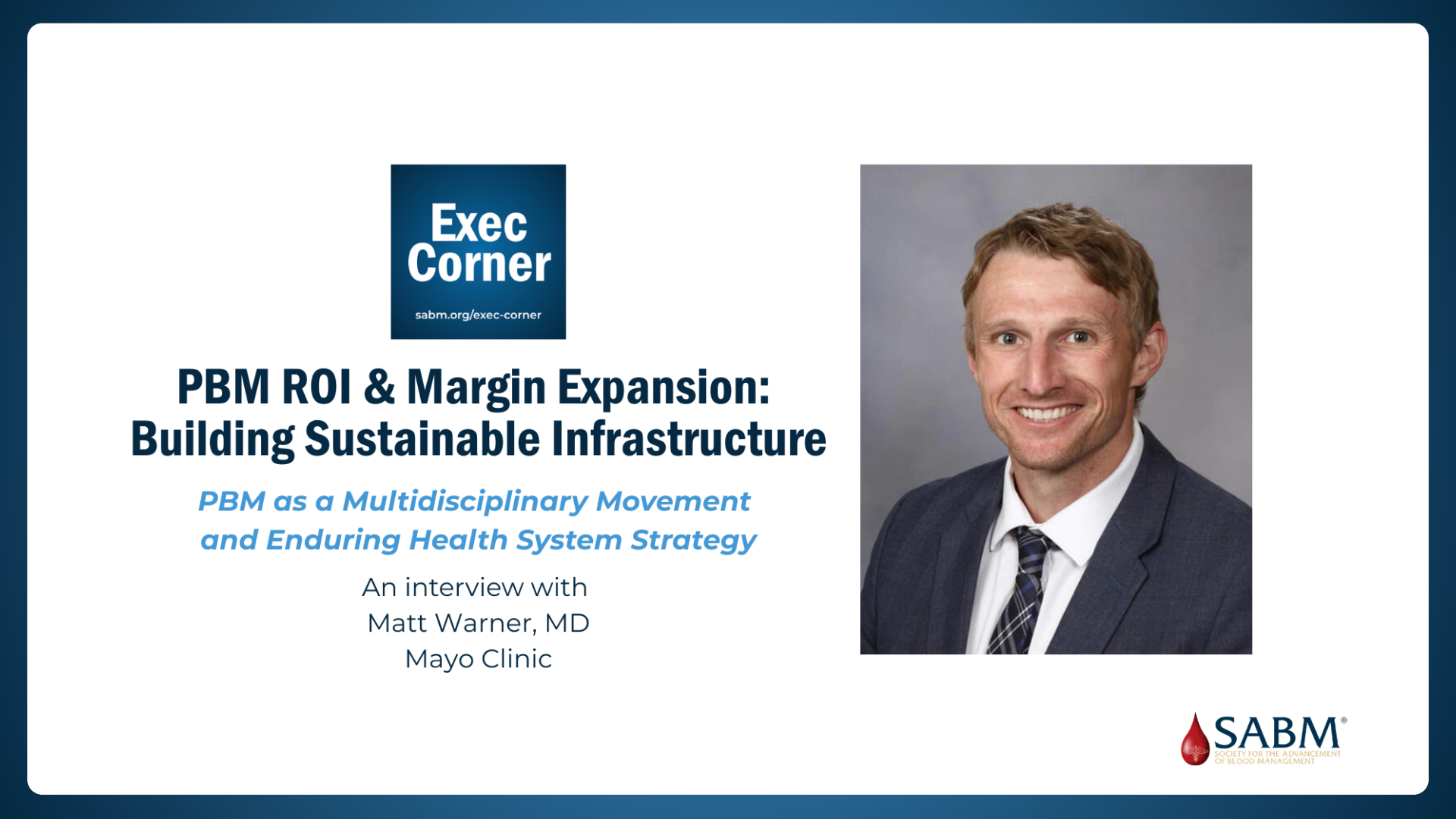
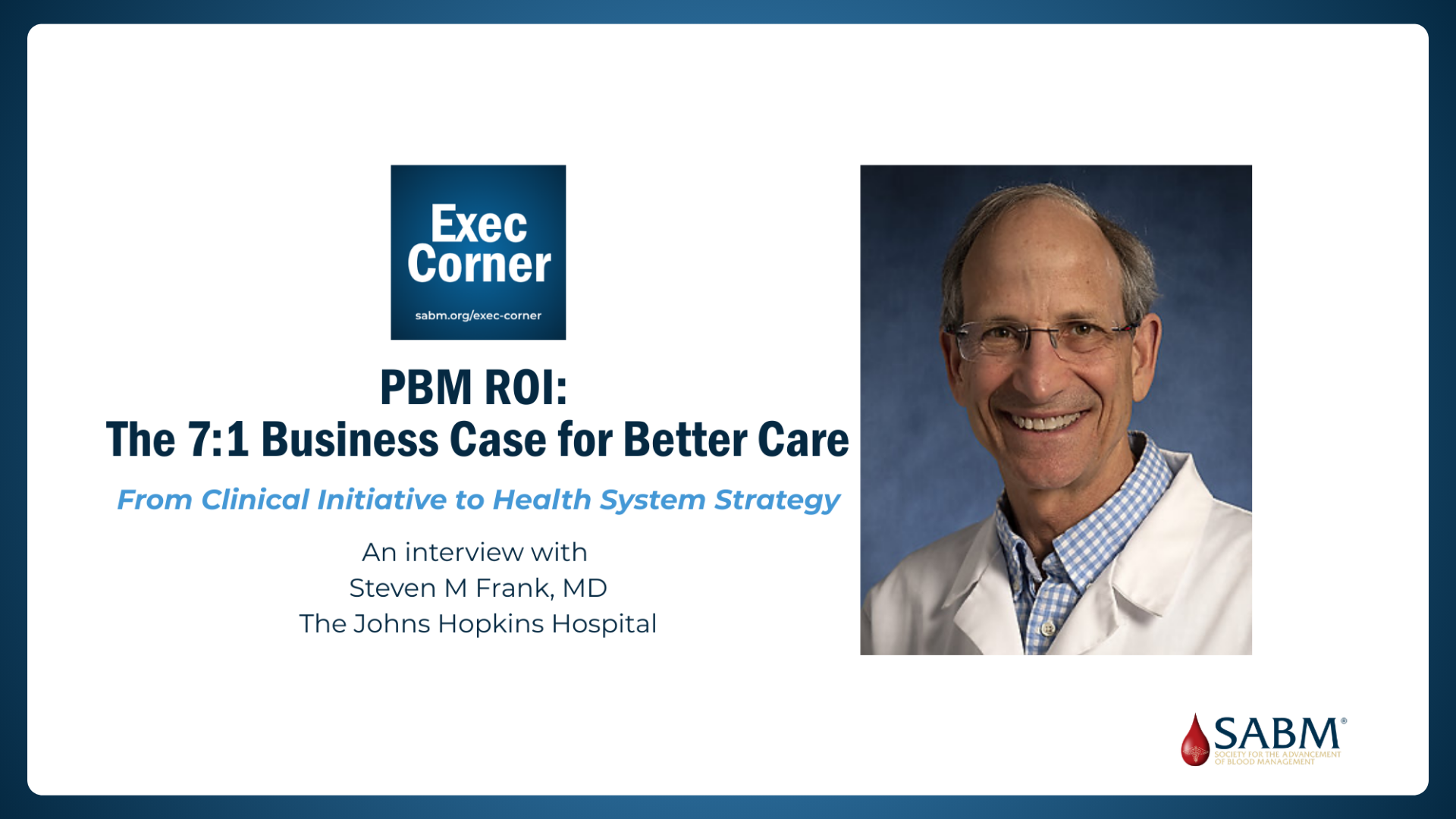
The following interviews and case studies highlight real-world results from leading institutions and experienced executives.
Case Study: Keck Medical Center of USC
At Keck Medical Center of USC, Patient Blood Management evolved from an early, purpose-built initiative into a defining institutional capability. Originally launched as a transfusion-free services program to meet the needs of patients for whom blood was not an option, the program helped establish the center as a national pioneer in complex, bloodless care.
More than two decades later, Keck Medical Center is recognized as an academic leader in delivering tertiary and quaternary surgical care without routine blood component support, most notably in hepatobiliary, pancreatic, cardiac, and urology surgery and in liver transplantation and resection. This work has been validated through numerous peer-reviewed publications and has influenced practice well beyond the institution.
In recent years, under the leadership of CMO Stephanie Hall, MD, PBM has been further integrated into clinical decision-making across the organization. These efforts have supported lower transfusion thresholds, more consistent evidence-based practice, and meaningful reductions in blood utilization and associated costs demonstrating how PBM can deliver both academic distinction and measurable operational value in a teaching hospital setting.
Disclaimer
The Society for the Advancement of Patient Blood Management (SABM) and the educational websites Iron Corner, Coag Corner, and Exec Corner do not provide medical advice. The content of these websites is intended for general informational purposes only and does not address individual circumstances. The information is not intended as a substitute for medical or legal advice, diagnosis or treatment, and its content should not be relied upon to make medical health decisions or for any other medical or legal purposes. Readers should never ignore medical advice in seeking treatment because of something they have read in the SABM website, Iron Corner, Coag Corner, or Exec Corner. Readers should make their own determinations as to: (i) what constitutes appropriate medical, technical, and administrative practices, and (ii) how best to evaluate and utilize for medical purposes any content posted in the SABM website, Iron Corner, Coag Corner, or Exec Corner educational resources and (iii) how best to comply with laws and regulations relevant to any questions. For the latter, readers should consider consulting, as to any medical matters, a qualified physician, and, as to any legal matters, an attorney familiar with related state and federal laws. The user of the SABM website, Iron Corner, Coag Corner, or Exec Corner, by accessing same, assumes all risks arising out of such use and releases SABM and its respective members, directors, officers and agents from and against any loss, damage, claim or liability arising out of such use of the SABM website, Iron Corner, Coag Corner, or Exec Corner. The SABM, Iron Corner, Coag Corner, and Exec Corner websites are based in the United States and the content herein as based on information (including, for instance, information and data pertaining to lab indices, pharmaceutical products and treatment protocols) pertaining to the United States for users in the United States. Additionally, information in this website pertaining to typical private and government insurance reimbursement issues may vary from one region of the United States to another. This site also contains “off label” information. Users of this website should be guided accordingly.